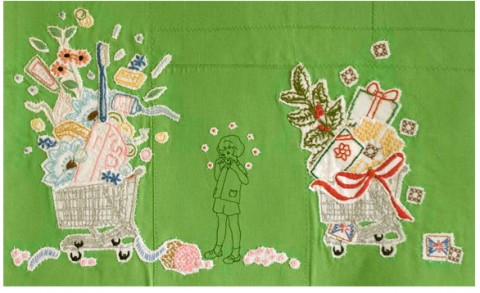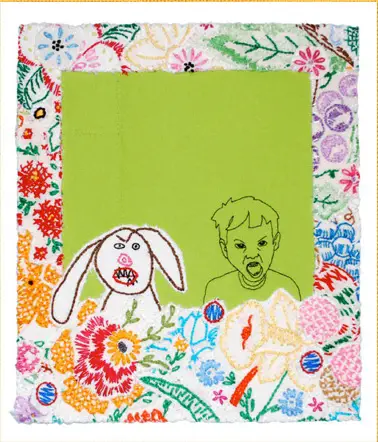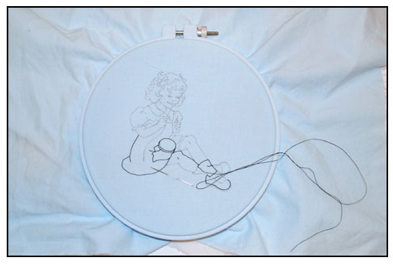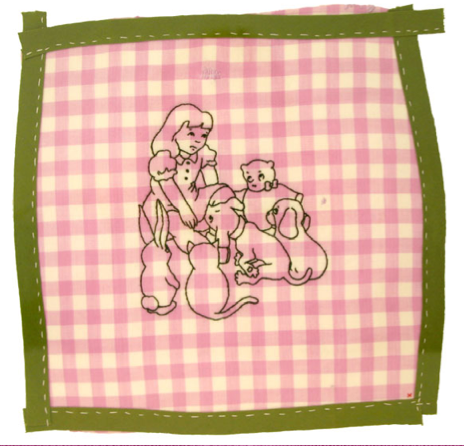
Future Heirlooms

Future Heirlooms- Sophia Narrett

by Joetta on 5 April 2013

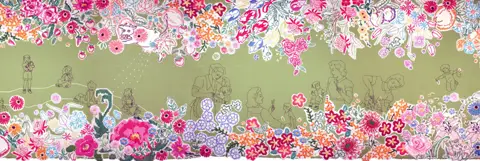
future-heirlooms-480x131

I first came to the work of the super talented Sophia Narrett via her submission to one of the past exhibits that I curated. I was immediately drawn to her use of bright happy colors in contrast with ominous images of apocalyptic like love. She combines her conceptual statement and intelligence with lowbrow objects such as silk flowers, plastic leighs and even hula hoops to create truly contemporary works that comment on society and relationships. She has proven to be an artist to watch and her work has been shown in NYC as well as across the country.  Her work gets better and better and I cannot wait to see what she does next- and she is super sweet to boot.  So enjoy learning more about this up and coming artist…

What is your background as an artist?

I grew up in Maryland and moved to Providence in 2007 to attend Brown University. At Brown I concentrated in Visual Art with an emphasis on oil painting. After graduating I stayed in Providence to continue my studio practice. It was during this time that I began working in embroidery, although I had never completed any formal training in fiber. Last September I began working towards my MFA in Painting at RISD.

Screen shot 2013-03-27 at 2.16.51 PM

To Be Given Something, 2012, Embroidery Thread, Fabric, Acrylic, 13 x 17 in

How does working with embroidery/stitching affect the conceptual aspect of your work? What drew you to stitching?

I became interested in embroidery for primarily formal reasons. I liked the rules and possibilities it provided in terms of image making, the set palette, the linear aspect of the thread, and the separation of colors. I’ve always considered thread to be a medium that can participate in the illusionistic tradition of painting while still maintaining its own unique materiality. Of course there is a connection to the tradition of embroidery as women’s work, as well as to the feminist artists who subverted that history.

Screen shot 2013-03-27 at 2.17.48 PM

If you had to describe your work in 3 words what would they be?

Romance, Despair, Ecstasy

Screen shot 2013-03-27 at 2.24.53 PM

If I Have to Break My Neck to See It Then I Will

Can you give us a 3 sentence or less artist statement of your current body of work?

In a garden nature is choreographed to be a space of fantasy and possible transcendence, and it invites physical attempts to connect with the landscape. If our bodies are visible manifestations of our consciousness, is motion or gesture intrinsic to experiencing a feeling? If you lie down on top of that fallen tree will you feel better?

Screen shot 2013-03-27 at 2.17.12 PM

Still Burning, 2012, Embroidery Thread, Fabric, Candles, Acrylic, Dimensions Variable

You are starting to push scale and the picture frame what has led you to this?

I love the weight of medieval tapestries. Of course they are still rectangular, but in trying to achieve the floating heaviness that they embody, I have been moving away from stretchers and frames.

Screen shot 2013-03-27 at 2.17.02 PM

No Matter How Many Skies Have Fallen, 2012, Embroidery Thread, Fabric, 35 x 35 in

Your work often has a darkness or apocalyptic feel can you speak to this?

At its most severe, my work is an effort to live in the face of nihilism. I am asking whether loving someone can give meaning to life, and if a man or woman can replace religion for another person. Can romance, glamour, and eroticism be sublime? What does a visualization of desire, hopelessness, and denial become? Does it dissolve into sadness? What’s sad enough? When do things start getting away from you? What are we living for? But the people in my images still smile.

Screen shot 2013-03-27 at 2.16.35 PM

What is your favorite thing about your studio?

I think the best part of my studio at RISD is that I am able to make a mess again, after working at home for two years. I have been using a lot of dirt in the model making, which has a way of spreading everywhere. Also it is incredible to work in such proximity to my classmates. It’s an atmosphere of constant feedback and support.

Screen shot 2013-03-27 at 2.17.20 PM

Our Path, 2011, Embroidery Thread, Fabric, Artificial Evergreen Branch, Approx. 66 x 42 x 9 in

Screen shot 2013-03-27 at 2.17.35 PM

What is the next direction or step for your work?

I have recently started a model making process, making miniature figures and scenery from which to base compositions on. I have been thinking about the fiction inherent to image making, and ways in which the physical models and embroidered or painted images can continue to influence each other.

What was the last really inspiring work of art you saw and why?

Joke Schole’s I Will Stay Alert, at SHOW ROOM Gallery. The unification of different objects into porcelain, and their delicate arrangement creates such a resonant feeling both in the physical piece itself as well as in the story it conjures. And the pine cones as trees are an amazing scale shift.

Sometimes Its Easy (detail)

Sometimes Its Easy (detail)

What do you struggle with most as an artist?

Translating an idea into an image that is faithful to the original thought while still becoming something new that is in dialogue with its own fabrication and objectness.

Screen shot 2013-03-27 at 2.44.26 PM

Had We Known It Would Be Like This We Never Would Have Been So Worried Back Then

What else do you spend your time doing?

Mostly I’m a workaholic and I look forward to any day that I can be in the studio uninterrupted, but I do spend a lot of time reading. And I always listen to music while I work (lately its Grimes and Lil Wayne). A lyric from a song or a passage from a novel taken out of its original context often becomes the basis from which I extrapolate a new image.

Where can we see your work?

I have a solo show at Space Gallery in Portland, Maine opening Friday May 3, 2013. My website is www.sophianarrett.com.

I truly love her work and love seeing how it has developed over the past few years and cannot wait to see what she does next. Thank you so much Sophia for inviting us into your world.

Until next time keep your needle threaded.

Joetta Maue is a full-time artist, writer, and curator with a focus on the art of the needle. Her most recent body of work is a series of embroideries and images exploring intimacy. Joetta exhibits her work throughout the United States and internationally, and authors the critical blog Little Yellowbird as well as regularly contributes to Mr. X Stitch.


{ 0 comments }

Future Heirlooms- Sarah Terry

by Joetta on 7 December 2012

I first saw this work on the pages of Hoopla and loved the juxtaposition so… Let’s just dive in with Sarah Terry of Guerilla Embroidery shall we?

What is your background/education as an artist?

I was lucky enough to study at a school with an amazing art department, and started using machines for free motion embroidery at 16. I then studied on the Art Foundation course at Leeds College of Art and Design, where I got a chance to try my hand at other disciplines. Although it was only an 8 month course, I was prolific (producing over 30 sketchbooks!) and my time there really helped identify textiles as the path I should pursue. I then studied on the Embroidery course at MMU (Manchester Metropolitan University) for 3 years, graduating in 2006.

Can you give us a 3 sentence or less artist statement of your current body of work?

My current work explores the idea of ritual through the use of hand embroidery. I am also exploring the way in which scale can impact on the final piece.

One of the series that I really love is “Home invasion” in which you embroider spiders, bugs, and small pests onto found vintage linens: can you talk about how you came to this work?

The idea for ‘Home Invasion’ began when I was on a year long residency at a school in Australia. I’m not usually scared of spiders or other creepy crawlies, but in Australia those things can kill you! This body of work was a humorous way of dealing with these fears. The op shops (charity shops) in Australia are amazing, and they were full of these hand embroidered linens. I had set myself the challenge of only using materials found in the country when I moved there, and the use of the linens not only linked nicely into this wish; but also strengthened the concept behind the embroideries in the first place. It allowed me to create the juxtaposition between the original cutesy, flowery stitches and my own embroideries.

For your solo show “drawing threads” you say the work is about the passage of time, can you talk about how these works reflect that and what about this inspires you?

When I spoke about the work reflecting ‘the passage of time’, I was literally referring to the amount of time which is takes to hand embroider. My work for this show was created completely by hand, which allowed me time to meditate on the meanings of the work and the experiences that may have led me to that point. Although they never made it into the show, I did several embroidered ‘diaries’ which allowed me to cement certain memories in my mind. I have always been fascinated by creating work from which it is possible to identify the time when it was made – a visual marker for time, if you will. I hope that in the future you will be able to tell when my work was made through the events and people it references. I also seek to ‘place’ my work through my use of materials. In the case of the work for the ‘Drawing Threads’ show, all the materials were recycled clothes or sheets bought locally. By using these materials I am able to intrinsically link my work to the place where it was created.


You recently had a solo show, can you talk about the work in the show and the challenges of creating a solo exhibit?

My most recent show ‘Surface Tension’ is a natural extension of the ‘Home Invasion’ series which started in Australia. Ever since creating those pieces, I wanted to explore the idea of placing them in an installation – to create an entire room which supported the concept. I wanted to create the idea of someone’s sitting room (in the UK, people used to have a ‘sitting room’ which had all the best furniture in it, and was a place where you received guests who wouldn’t be allowed to see the rest of the house!) I wanted the viewer to be lulled into a false sense of security by the seemingly ‘homely’ feel of the room; to be invited in; and it was only when you had spent some time in the place that you would notice that it was literally crawling with insects: on the tablecloth, in the cups and sugar bowl, on the wall.

One of the biggest problems I had with this show was a lack of time. It was also hard to source the perfect accessories (tables, chairs, wallpaper) in order to create the right atmosphere. Luckily, I feel I was successful in this endeavour. The feedback I got from visitors to the show was just what I wanted. Someone described it as ‘a perfect balance between creepy and cosy’ which I thought was great!


How does working with embroidery/stitching affect the conceptual aspect of your work? What drew you to stitching?

I love to draw, and to me, a needle and thread is just another way to create line. I also can’t explain it, but the process of stitching; of feeling the needle pass through the material is innately satisfying. I am definitely a tactile person, and the ability to create artwork which can be handled is essential to me. I like how embroidery allows me to create work which can also be used rather than just displayed; and how I am creating something which will last the passage of time and tell a story in the future. One of the big reasons I use found linens is that I like the idea of interacting with stitches which have already been made; and elevating these pieces above their original purposes. I like to think how the original creators would feel knowing their work has been displayed in a gallery! After all, it is their input which has allowed me to start a dialogue – and who knows how this dialogue will continue long after I am gone?

By using embroidery I am also making a conscious decision to perpetuate a craft technique and to make it more relevant to today’s society. It is criminal that crafts are dying out every day as people show less and less interest in them. Where would we all be if we lost the ability to create?

What is the next direction or step for your work?

I have several ideas swirling around my head at the moment – I have been exploring the dichotomy between tattooing and embroidery for a while now (Needled I and II are an example) and the piece I am currently working on references this through the use of tattoo like imagery. I am also challenging myself with scale and want to explore the idea of decoration through use of colour and more solid areas of stitch. I feel that I struggle with finding my ‘style’ and this latest work is an experiment to create something which I feel is very ‘me’.

Tell us more about your project Guerilla Embroidery? What makes it Guerilla?  What does the workshop and teaching aspect of this project add to the idea?

The idea of ‘Guerilla Embroidery’ really arose from my way of using a traditional technique with modern imagery and concepts. I like to think that people will expect something different from me as a result of the name; and that my work reflects this through its subversive nature. Although it wasn’t a thought at the time, the name also quite nicely fits the way I approach my teaching as well. I have some very strong ideas about education and the role that the arts and creativity should play in the curriculum that some might call radical. It also helps that it isn’t a surprise when a tattooed, pink haired person turns up to do a school workshop either – it’s all in the name!

What do you struggle with most as an artist?

I touched upon this idea previously when I mentioned how I struggle to find a ‘style’. I have often reflected upon the fact that artists who have a clear marketable identity often do better than those whose identities are undefined. I oscillate wildly between totally believing in myself, and completely doubting the strength of my concepts. I find operating on my own quite a struggle sometimes and I miss being part of a studio atmosphere and how experimental it allows you to be. I also find it hard sometimes dealing with pre-conceived ideas from the ‘art world’. I was at a networking event recently and asked someone from a certain Arts website if they represented all types of art. When I told her I was a textile artist, she said ‘oh yes, we do have crafts on there too’. It is attitudes like this that make it hard for people like me who straddle both ‘art’ and ‘craft’. My art would be nothing without my craft, in fact, I owe it everything: but I am still an ‘artist’. I just choose to use needle and thread rather than paint and brush.

What else do you spend your time doing? Do any of these inform your work?

I work part time teaching Art to Young Offenders, which is an amazing job. I love it, and feel very lucky to be able to say that. Some artists teach because it is an additional income; I teach because I am passionate about it and the effect it can have, especially on vulnerable and hard to reach young people. I also run a Saturday morning Art group for students aged 11-16 at a local Arts centre. Currently, I am part of a new group called TEA (Thinking, Expression, Action), which has been set up alongside the ‘Campaign for Drawing’ in response to the latest OFSTED report on Art and Design in schools. The end result to this being to create new resources which can be accessed nationwide and which tackles using drawing in new and innovative ways in the classroom. I am also currently obsessed (OBSESSED) with quilting. I am definitely envisioning ways I can combine this with my embroidery in the future.

Where can we see your work?

When I got back from Australia, I set myself the challenge of having a solo show every year. I have managed to do this so far, but it has meant that I have less time to develop new bodies of work. For this reason, I plan to spend 2013 creating and exploring new ideas. However, I am always looking for new opportunities, so who knows what group shows might feature my work next year? In the meantime, you can see my work on my website: http://www.guerilla-embroidery.com and see more work in progress (and my other projects, including TEA and teaching/ workshops) on my blog: http://www.guerilla-embroidery.blogspot.com . You can also follow me on twitter (@G_Embroidery) and on Instagram (GUERILLA_EMBROIDERY). The tea-set from ‘Surface Tension’ will be for sale at the Design Shop, Dean Clough, Halifax, UK very soon.

Thanks, Terry. Cannot wait to see how her new work develops.

 Until next time keep your needle threaded.

Joetta Maue is a full-time artist, writer, and curator with a focus on the art of the needle. Her most recent body of work is a series of embroideries and images exploring intimacy. Joetta exhibits her work throughout the United States and internationally, and authors the critical blog Little Yellowbird as well as regularly contributes to Mr. X Stitch.

{ 1 comment }

Future Heirlooms- Rachel Rose

by Joetta on 2 November 2012

A little late on the posting here today, apologies to all you fabulous stitchers. But I am excited to share the work and words of artist Rachel Rose with all of you today. I first came across Rachel’s work during the curatorial process of the Brooklyn show small stories and I was totally excited by her original approach to mixed media work involving the stitch.  I was happy to include her work in the show and when I saw it in person I loved it even more, her choice of pixellated patterns, her very tight and neat stitching and her banal but meaningful subject matter of pets all come together to make some compelling work. I really wanted to see and know more about Rachel and her work and Future Heirlooms was the perfect excuse. So join me with Rachel Rose.

Background?

I graduated from Michigan State University with a BFA in printmaking and painting. I took an intaglio (etching) class early in my undergrad and immediately fell in love with how labor intensive the process is, as well as how rich the texture is. Many of the fiber artists that inspire me started working in printmaking, so I’m sure there is a connection between the two. While at MSU I took an elective in weaving and that sparked an interest in fiber arts. In a few of my paintings I tried using thread with very little success . It wasn’t until a few years after graduating that I felt compelled to delve back into fiber.   I learned embroidery by watching YouTube videos on how to stitch and looking at all the fiber art I could find.
I think the most important aspect has been to just pick up a needle and thread and experiment with it.


If you had to describe your work in 3 words what would they be?

More is more.

You have a series that focuses on domestic animals can you talk about how you came to this work?

Last fall, my cat Oscara fell very ill and spent a few nights at an animal hospital. Over the last six years she has been my constant companion and home didn’t feel the same without her around. It got me thinking about how our pets create the feeling of home and become intertwined in our habitat. It amazes me how we can have such a close friendship to an animal of another species. So often animals are able to fill a void that other humans are unable to.

How does using images found via social media affect this work?

Using images from social media allows me to incorporate other people into my work. It becomes not just about my own narrative and my own experience, but about the stories of many individuals. People upload photos of what is important to them and the memories that they want to hold on to. There is so much that you can learn about someone without ever meeting them, without ever even talking to them.  Some of the images are from good friends of mine, but most of them have come from people I’ve only met a couple of times or don’t know at all.

As a whole, I think social media has allowed our culture to become much more voyeuristic. Just about everyone has looked through a profile of someone they don’t know on a social media site. Something that I think about as I am looking through profiles and compiling photographs is how people are able to control their personas. While I am able to peer into their lives, I am only seeing what they want me to see. While I can find out many intimate details about an individual’s life, I’m not really getting a full story on who they actually are.

You generally illustrate the animal through a stitched pattern that references both pixilation and decorative fabrics/wall paper, can you talk about this decision and the conceptual effect of this?

I chose to use a pattern to fill the silhouette of the animal for two reasons. First, to remove the personality and individuality from the animal. This carries on the guise of anonymity that we tend to feel when using social media. It also represents how the animals have become so interwoven into the fabrics of “home life” that they have become practically inseparable.

You also seem to be drawn to images with banal clutter like cords, busy patterns, and general daily discards, how do you think this affects the images for you?

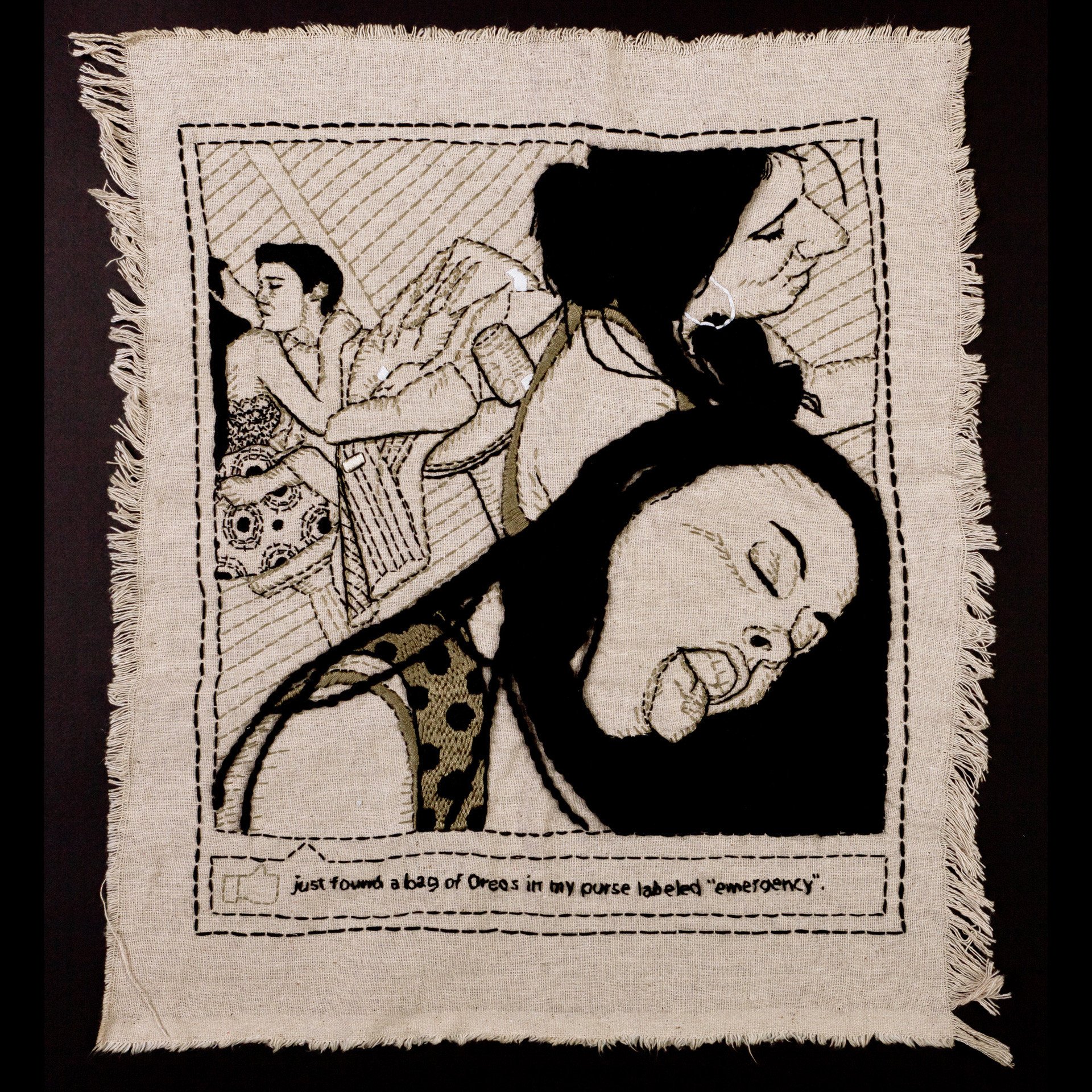
Banal objects like cords and beer cans are the artifacts of our daily lives. They tell the stories of how we spend our days performing completely unremarkable routines. But I admire the honesty of these objects, and the beauty of their simplicity. They are the objects that are recognizable to just about everyone regardless of age, gender, or social standing. Its makes for very democratic art during a time when people ought to be focused on commonalities rather than differences.

in process work.

How does working with embroidery/stitching affect the conceptual aspect of your work?

I’ve often wondered what attracts people to particular mediums. I think it must be in the tactile qualities. That sense that as soon as you pick up the tools they feel like they just belong in your hands. I do enjoy the tedious nature of embroidery. There is a very intimate relationship you have with the work. You have so much more time to look at the image and consider the formal and conceptual qualities of it when you embroider as opposed to drawing.

What are  your techniques and processes of making?

I keep a folder on my laptop of images to potentially use. Sometimes I just happen upon an image that stands out to me, other times I’m seeking out something specific. When I start working on a new piece I scroll through and decide on the particular photo I want to use, then pair it with the pattern and mediums that I think will work well with it. I tend to not plan out exactly how I’m going to execute each piece. This allows me the freedom to experiment and play without feeling constrained to stick with my original idea.

How has your work evolved since you first began working with embroidery?

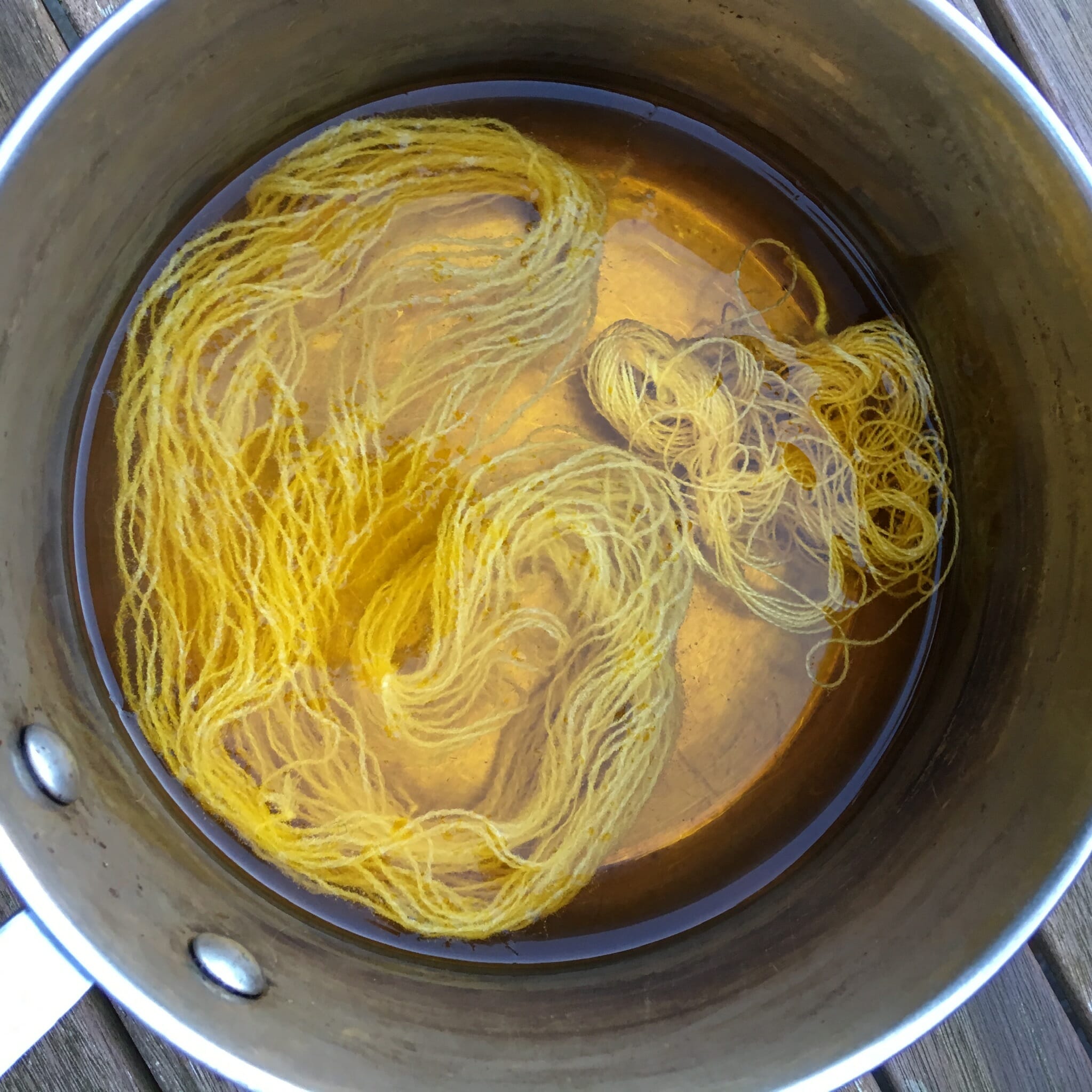
What drew me into stitching was creating an image using texture. I first started by using a very thick thread that I found in my late grandmother’s sewing box. I would create the image using only the single color of thread and then dye the finished embroidery so that the image would be revealed only through texture. I think this was influenced by my background in intaglio using only one color ink and relying on texture to create value.

As I continued experimenting with embroidery I would add color through other mediums such as dye, salt, wax, and embellishments. It was quite a while before I started working with different colored thread. I think that the more that I worked with thread, the more comfortable I became with using it in a more traditional way.

You often incorporate painting with your work, can you talk about the challenges of combining the mediums or perhaps the pleasures?

I remember being in an art supply store and overhearing a girl exclaim “I love supplies!” and I just knew exactly how she felt. Having a bigger vocabulary lets us tell better stories. Each tool has so much potential, so many possibilities for what it can create. Combining mediums makes the work so much richer, both visually and conceptually.

What is the next direction or step for your work?

I’ve begun collaging images of Detroit and embroidering them on record sleeves. All the needless worry and chatter over the end of the 13th baktun (21 Dec., 2012) lead me to consider the passage of time. Humans have changed the landscape of the world so much over the last few thousand years, but human nature hasn’t changed at all. We still suffer from the same fears and vices, still seek out love, lust, power and wealth. Detroit’s landscape has a unique way of telling these stories. I don’t think of the images of “ruin porn” as preying on the vulnerable, but about looking at our not so distant history with wonder and curiosity.

What do you struggle with most as an artist?

I think that the biggest challenge an artist faces is the fear of doing something to push the work farther at the risk of ruining what has already been done. Combining paint, melted wax, and other materials has the potential to erase weeks of work. Before making a bold move I always have a split second of doubt, a nagging feeling that perhaps I should slow down and reconsider before I destroy everything. Every time that I push those thoughts away it is a small victory. Working on the edge of destruction is where the best discoveries happen.

What else do you spend your time doing? How do these affect your work?
Since the end of August I’ve been working around 50+ hours at two jobs, and have been taking two classes. I recently started working at a local craft company doing production work. I love working with my hands and its very satisfying getting to make a living doing just that. Its great getting a daily reminder that a lot of people value handmade items and that a business can thrive on craft and hiring local people. I have a second job working as a framer. Through this I’ve learned about the various ways of mounting and presenting artwork. This has led me to consider the presentation of my work while I am in the process of working on it and has definitely had an impact on the finished piece. While framing has been a great experience, I plan on leaving that job soon to focus on other projects.
Currently I’m taking an anthropology class and a ceramics class at community college. It’s been a great experience to be able to enjoy classes without any of the pressures of pursuing a degree. While there is so much information that we can learn from books and on the internet, it’s not the same experience as being guided by a professor and learning with a group of people. All of our experiences have an effect on the work that we make. I think its important to seek out those experiences that make us think, make us feel, and leave us with a good story to tell.
Where can we see your work?

My website is http://www.rachellynnrose.com/ though I am still in the process of updating it. My most current work can be viewed at http://www.flickr.com/photos/rayroo/

I’m also going to have two new pieces in a show curated by Jamie Chalmers at MK Gallery in December. (me too!)

Thanks so much Rachel!!! I loved learning more about how she came to the awesome work she does.

Until next time keep your needle threaded.

Joetta Maue is a full-time artist, writer, and curator with a focus on the art of the needle. Her most recent body of work is a series of embroideries and images exploring intimacy. Joetta exhibits her work throughout the United States and internationally, and authors the critical blog Little Yellowbird as well as regularly contributes to Mr. X Stitch.

{ 0 comments }